Receipts Don’t Forget: Build a 30-Day Price Memory Before the Next ‘Was’ Tag Wins
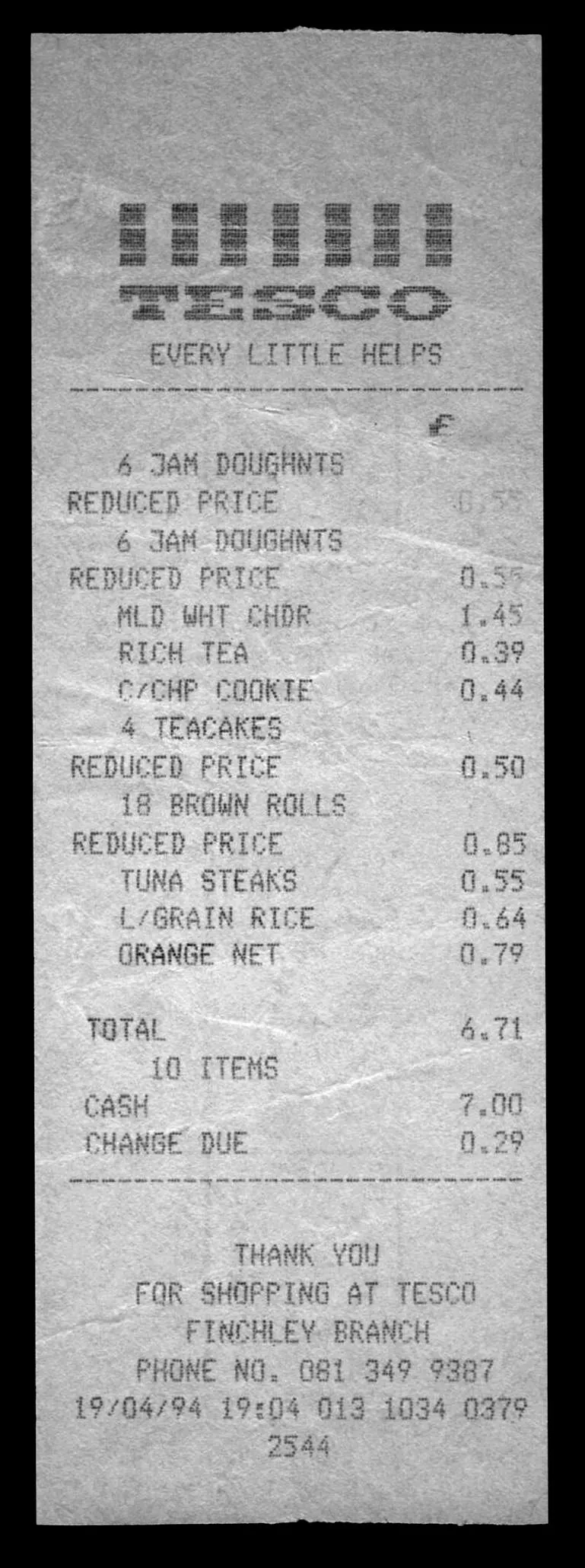
Photo: Tesco, Public domain, via Wikimedia Commons
A red tag says the coffee is on sale. A yellow sticker swears the paper towels are a steal. The shelf tag shows a crossed-out price that looks official enough to frame. But here’s the quiet problem: you have no memory of what that item actually cost three weeks ago. That’s exactly how a fake ‘was’ price gets traction.
You don’t need a price-tracking app, a spreadsheet, or a subscription to fix that. You need a receipt pile, a phone note, and roughly five minutes a week. Build a 30-day price memory for 10 to 15 things you buy often, and the next so-called markdown has to answer to your own records.
Pick 10 to 15 items, not your whole cart
Start with the repeat buys that make your budget feel leaky. Good candidates include coffee, laundry detergent, trash bags, pet food, cereal, pasta, cooking oil, paper towels, toilet paper, dish soap, eggs, milk, frozen vegetables, sandwich bread, and a household cleaner you reach for constantly.
Keep the list short enough to maintain. Fifteen items is plenty. If you try to track 60 products, the habit dies by week two, and a dead price log saves exactly nothing.
Write the list in a phone note. No special format. Just item names grouped by store if you shop at more than one. The goal is a working memory, not an accounting system.
Treat receipts as the paper trail
Every time you shop, keep the receipt long enough to log the items on your list. You don’t need to save every receipt forever. A shoebox, a folder, or a photo of the receipt in your phone’s camera roll is enough.
For each tracked item, note four things:
- Date
- Store
- Package size
- Price paid
That last detail matters more than the sticker price. A 12-ounce bag of coffee at $8.99 and a 24-ounce bag at $15.49 are not the same deal just because one number is smaller. You’ll handle that in the next section.
If you use a store loyalty account, your digital receipt may show the same information. Use whatever is fastest. The point is to capture the real price you paid, after discounts and before you forget.
Make unit price the common language
Sticker prices are designed to be compared at a glance. Unit prices are designed to tell the truth. Most US grocery shelves already print a unit price somewhere on the tag, but it’s often tiny and sometimes based on a different unit than the one you care about.
Pick one unit per category and stick with it for 30 days. For coffee, use price per ounce. For laundry detergent, use price per load if the label gives you a load count. For paper towels, use price per sheet or per square foot. For trash bags, use price per bag. For cereal, use price per ounce.
When you log a receipt, do the quick math once. Put the unit price in your phone note next to the total. Now every future tag has a fair comparison point.
Example: a 30-ounce coffee canister at $10.49 is about 35 cents per ounce. A 22-ounce canister at $8.99 is about 41 cents per ounce. The smaller package looks cheaper on the shelf. Your unit price says otherwise.
Let shelf tags audition, not testify
Shelf tags are useful clues, but they are not your evidence. A tag that says ‘was $6.99, now $4.99’ might be based on a price that existed briefly, at one store, or during a different package size. It might also be a perfectly real markdown. Your job is not to assume the worst. Your job is to check.
When a ‘was’ price appears, glance at your phone note. Has this item actually sold near that old price in the last 30 days? If yes, the markdown deserves a closer look. If no, treat the crossed-out number as decoration until you have better proof.
This is especially useful around holiday season, when endcaps multiply and ‘rollback’ signs get ambitious. A 30-day memory gives you a calm answer to a loud tag.
Set a personal buy-below price
After two or three logs, you’ll start to see a range. Maybe your usual coffee unit price sits between 33 and 39 cents per ounce. Maybe the good paper towel price is under 2 cents per sheet. That range becomes your buy-below number: the price at which you’re comfortable stocking up, not just buying.
Write it directly in the phone note. For example: coffee, buy below 34 cents per ounce; laundry detergent, buy below 18 cents per load; trash bags, buy below 15 cents per bag.
Now a sale has a job. It either beats your number or it doesn’t. You’re not arguing with the tag. You’re comparing it to your own history.
Review once a week, not once a shopping trip
A weekly five-minute review is enough. Open the note, add any new receipts, and check whether any tracked item is close to a buy-below price. Then put the phone away.
This keeps the habit from turning into a second job. It also gives you time to notice patterns. Many household staples cycle through promotions every few weeks. A 30-day log won’t capture every seasonal swing, but it will catch the most common fake-out: a ‘sale’ that lands right back at the price you paid without thinking last month.
Know when to stop tracking
If an item rarely goes on sale, or you buy it only a few times a year, drop it from the list. Replace it with something you buy weekly. The log should stay lean and useful.
Also, don’t let a good price log become a reason to stockpile things you don’t have room for. A buy-below price is a permission slip, not an obligation. If you already have three bottles of dish soap, a fourth one at a great unit price is still clutter with a discount.
The payoff is a quieter cart
After 30 days, you’ll have something most shoppers don’t: a written memory of what normal looks like. You’ll know which ‘was’ prices deserve a second look, which package sizes are quietly overpriced, and which sales are actually worth changing your route for.
No app. No spreadsheet. Just receipts, a phone note, and a simple rule: before a sale claims to end, check what your last month says. At SavfyShop, that’s the kind of smart find we like best — the one that keeps working after the red tag comes down.