Black Friday’s Red-Tag Reality Check: A 72-Hour Price Audit for 2026
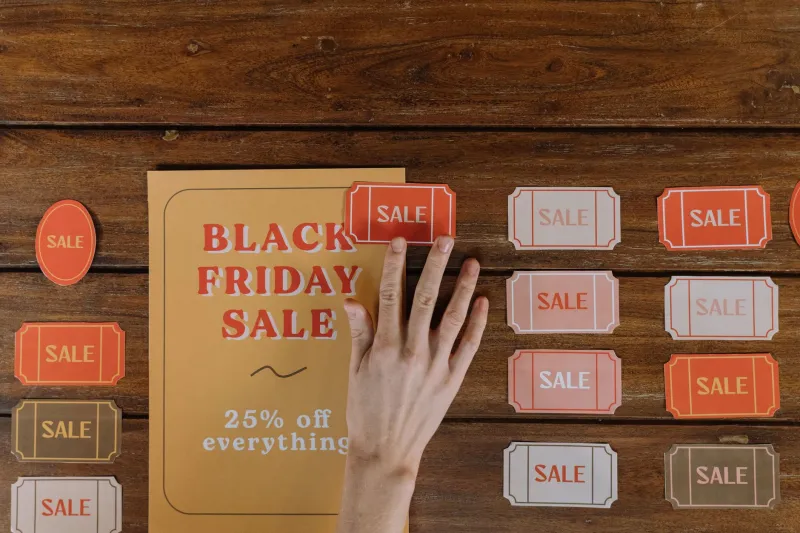
Black Friday 2026 is going to be loud. Every retailer will have a red tag, a countdown clock, and a phrase like ‘lowest price ever’ printed somewhere near the buy button. Some of those offers will be genuinely good. Plenty will be ordinary discounts dressed up in holiday lighting.
The fix is not to become a full-time price historian. It is to use a simple 72-hour audit: capture a baseline before the sale noise peaks, inspect the offer like a skeptic, then give yourself three days to decide. At SavfyShop, that is the kind of smart-finds math we like—less drama, better buys.
Why a 72-hour window beats a 72-second panic buy
A 72-hour window is long enough to check price history, compare competitors, and sleep on the purchase. It is short enough to keep you from waiting forever on an item you actually need. The goal is not to prove every deal is fake. The goal is to separate a real discount from a reference price that was inflated last week and quietly retired this morning.
Retailers know urgency sells. You are borrowing a little patience to blunt that urgency.
Step 1: Capture a baseline before the sale hits
Start about two weeks before Black Friday 2026, or as soon as you know what you want. Open a notes app or spreadsheet and record the item before the holiday banner appears. Do not rely on memory. Screenshot the product page, including the model number and seller.
A simple tracking template is enough:
| Item | Retailer | Model number | Pre-sale price | Sale price | Coupon or member price | Price-history check | Return deadline | Notes |
|---|---|---|---|---|---|---|---|---|
| 55-inch TV | Example store | Exact model | $499 | $399 | $20 email code | CamelCamelCamel or store history | Jan. 15 | Check panel type |
| Laptop | Example store | Exact config | $749 | $649 | Member card only | Prior low was $629 | Jan. 10 | Confirm RAM is soldered |
That last column matters more than people admit. A deal on the wrong model is not a deal. It is a future return label.
Step 2: Read the red tag like a skeptic
When the sale goes live, compare the offer to your baseline—not to the retailer’s ‘was’ price. A crossed-out number is a claim, not a receipt. Look for the exact model, the included accessories, the storage size, and whether the price requires a membership, a trade-in, or a store credit card.
Watch for these common moves:
- Bundle inflation: A lower headline price may include a case, gift card, or subscription you would not have bought. Compare the price of the item alone.
- Member-only math: A doorbuster price that requires a paid membership is not the same as a public discount. Add the membership cost if you are joining just for this purchase.
- Model-number shuffle: Retailers often get special configurations for big sale weekends. That is not automatically bad, but you need to compare specs, not just the brand name.
- Countdown theater: A timer that resets is a marketing device, not a price guarantee.
Use a price-history tool where you can, then check one or two competing retailers for the same model. If the ‘sale’ price is within a few dollars of the recent street price, it is not a disaster—but it is not a reason to rush, either.
Step 3: Put the purchase on ice for 72 hours
Once you have the numbers, screenshot the final cart price, set a reminder for 72 hours later, and walk away. During that window, ask three questions: Do I need this now, or am I buying because the tag is red? Is this the exact model I researched? Would I still want it at this price next week?
If the answer is yes, and the price is at or below the recent low you found, buy it. If the answer is maybe, wait. A real Black Friday deal in 2026 will usually survive a weekend. If it vanishes, another model or another retailer will likely fill the gap.
Category traps to watch in 2026
TVs: Doorbuster models can have different panel types or refresh rates than the version you saw in reviews. Check the exact model number, not just the size.
Laptops: Confirm RAM, storage, and whether memory is soldered. A cheap laptop with 8GB of non-upgradable RAM can be a false economy.
Headphones and smart home gear: Older generations get deep discounts near a replacement cycle. That can be a great buy—if you know you are buying last year’s model.
Small kitchen appliances: Bundles and ‘exclusive’ colors can hide ordinary pricing. Compare the unit price and the return window.
When waiting for Cyber Monday 2026 is smarter
If you do not need the item immediately, Cyber Monday 2026 can be the better test. Many retailers extend Black Friday pricing into the following week, and some online-only categories—accessories, storage, software, and smaller tech—get their best bundles then. Waiting also gives you a second look at stock and competitor prices.
Buy now only when the item is urgent, the price is genuinely below the recent low, and the return window is comfortable. Otherwise, let the red tag cool off. Your wallet does not need to celebrate on the retailer’s schedule.
The 72-hour decision checklist
- I recorded the pre-sale price before the holiday banner appeared.
- I checked the exact model number and included accessories.
- I compared the final cart price, including memberships and shipping.
- I looked at one price-history source or a competing retailer.
- I still want the item after 72 hours, at this price, without the countdown timer.
That is the whole system. It is not glamorous, but it beats waking up on Saturday wondering whether that ‘was’ price ever existed.